
Food waste is a quiet problem in Los Angeles County — and among the easiest to fix. Daily, tons of fruit peels, leftovers, and coffee grounds end up in landfills, creating methane, a potent greenhouse gas. But when these scraps go in your green bin along with yard trimmings, they’re transformed into useful, environmentally friendly products.
That’s the idea behind LA County’s organics recycling. It’s simple, community-powered, and based on choices at home. What does this mean for your kitchen or yard? Sorting food scraps isn’t about perfection; it’s about giving everyday waste a better future than the landfill.
Watch Food Waste Recycling: A Quick Guide for LA County to learn the basics of organic waste recycling, including how to properly sort your food scraps and the simple steps you can take at home to make a difference:
- Click Here to watch the video in English
- Click Here to watch the video in Spanish
- Click Here to watch the video in Chinese
See below for more information on the organic waste items that can be recycled in your green bin.
What Can Go in Your Green Bin
The green bin is designed for organic materials — anything that grew, lived, or came from a plant or animal. And yes, more can go inside than most people expect.
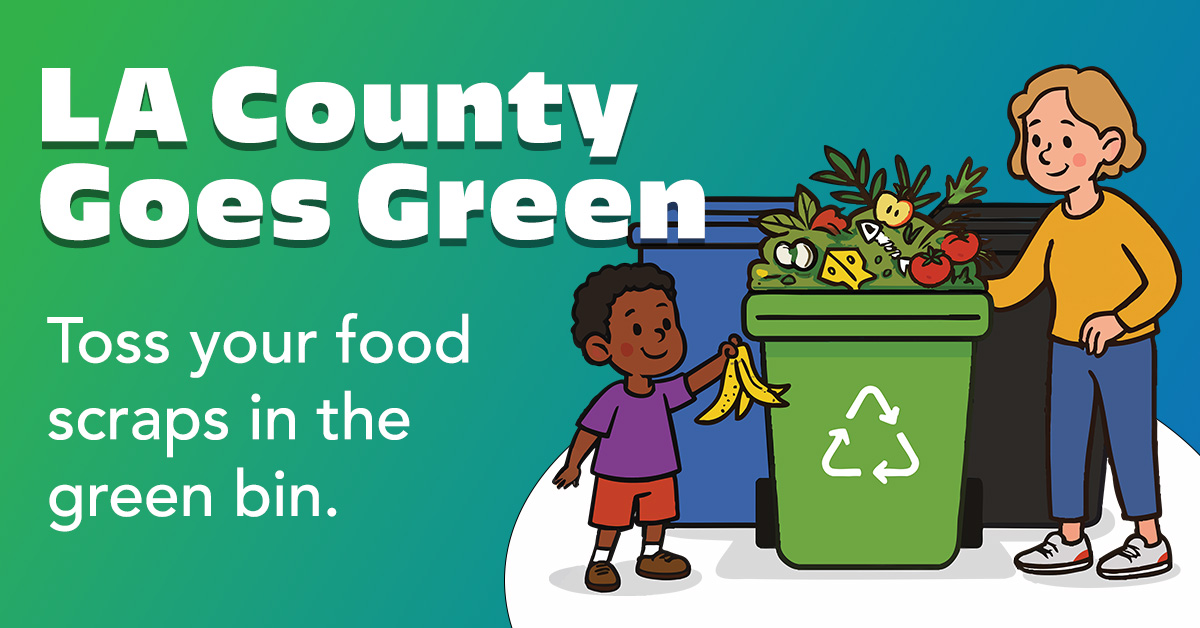
Food scraps: Fruit and vegetable peels, coffee grounds, tea bags, bread, pasta, meat, bones, fish and shellfish meat, eggshells, dairy scraps
Food-soiled paper: Pizza boxes, napkins, paper towels, paper takeout containers (as long as they aren’t plastic-coated)
Yard waste: Leaves, branches, flowers, grass clippings
Wooden items: Chopsticks, popsicle sticks, uncoated stirrers
If it comes from your kitchen or garden and isn’t mixed with plastic or metal, it likely belongs in the green bin.
What Stays Out
Some items don’t belong like glass, metal, Styrofoam, seafood shells, pet waste, diapers, and plastic-coated paper.
When in doubt, check with your local waste hauler or visit FightFoodWasteLA.com for more information.
Why It Matters
When we separate organic waste (food scraps and yard trimmings) at home, we reduce climate-warming emissions and reduce waste sent to landfills. Recycled food waste can be turned into Compressed Natural Gas (GNG), while recycling yard waste creates compost that supports healthier soil and greener communities. It’s a small habit with a big ripple effect — and one of the simplest ways to make Los Angeles County more sustainable.
Your green bin is more than a container. It’s a climate solution powered by everyday choices.
Visit FightFoodWasteLA.com now for more information and to start making a positive impact today.